|
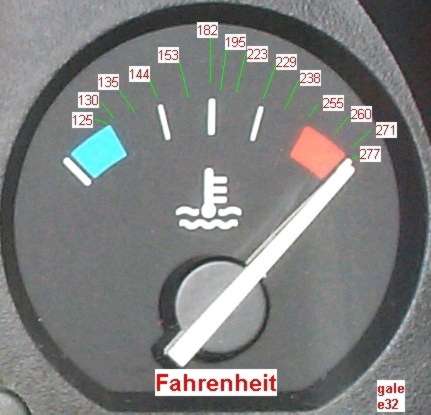
A major problem with the Bmw E34/E32 especially the BMW
M30 3.5l out of the 535i: overheating.
Don't expect the headgasket to last long in these conditions.
The temperature needle should be at the 1/2 mark all the
time. If the needle is near the 3/4 mark or red area,
you have an overheating problem, fix it soon.
On the BMW E34 525i 92 on and the E36 325i/is
with M50 engine, the engines were fitted with plastic
impellers waterpumps. These waterpumps fails, the impeller
desintegrates and you are left with no waterpump at all...
the engine overheats. You need to check that you have a waterpump
with metal impeller. Change your waterpump ASAP if yours has
a plastic impeller.
Understanding the cooling system:
• The waterpump (centrifugal type) is driven by a belt.
It allows the coolant to circulate.
• The thermostat controls the coolant flow into the
radiator. Closed when the engine is cold (nothing goes in the radiator,
open when the engine gets warm to flow the coolant inside the radiator
and cool it down.
• The primary coolant fan is mounted to the front of
the waterpump with the fan clutch.
• The fan clutch is a viscous fluid type that control
the speed of the fan based on engine compartment.
• A two speed auxiliary cooling fan is mounted in front
of the condenser. It is uses when the A/C operates and when coolant
temperature exceeds 196F (91C)
• The fan shroud is also an important item not to overlook:
the presence of a shroud, with about 1/2" to 3/4" clearance between
the tips of the fan blades & the shroud opening, and the fan inserted
about 1/2 way into the shroud opening is essential for efficient
cooling performance.
First: make sure that your radiator is in good condition, check
the belts, the hoses and the coolant level. Make sure that there
is no coolant leaks. Check the condition of the shroud for cracks
& its proper installation.
Car fluid or coolant circuit element just changed:
Your overheating is probably due to air trapped into the coolant
circuit. Use the bleed screw to bleed
the circuit. Then bleed again, again, again and again.
Nothing had been changed, car is overheating while idling or
heavy traffic:
1. Check that the thermostat works and opens.
2. Check the fan clutch.
Car overheating while driving. Not stop and go.
1. Bleed the cooling circuit.
2. Check the thermostat.
3. Check the water pump.
4. On the 535i, check the bypass hose located and attached
just above the upper hose neck on radiator and runs along
the inner walls to the Resivior tank. If it is plugged, the
car will overheat.
Overheating with A/C on, or very high temperature only.
1. Check that the auxiliary fan is working properly(Bentley manual
page 170-4).
2. Check the fan clutch.
How to check the thermostat:
A slow working thermostat is hard to diagnose. When the engine is
warming up and the temperature needle is near center, touch the
top radiator hose. If hot, the thermostat is working (could still
be a slow one). If there is cold area in the hose or radiator, check
the thermostat.
How to test the
fan clutch:
Sorry guys, the newspaper test is not reliable. If the thermostat
doesn't work or is slow moving, the fan clutch will fail the
newspaper test and will spin freely don't even bother explaining
how it is done as it is dangerous.
What you should do:
1) make sure that the thermostat is working!
2) when the car is cold, the fan clutch should turn with a
small resistance and not spin freely.
3) Let the car idling and the hood not closed but down. After
5-10 min, the temperature will rise at the 1/2 mark, check
that the fan is blowing a LOT of air inside the engine compartment
and increase in noise level, no need to put your hands, you
will feel it. If when the temperature hits the 3/4 mark, the
fan is not blowing a lot of air, that means that: either the
thermostat is not working or slow, or the fan clutch is bad.
Bypass hose modification: (Thanks to Dave Smith)
Picture from
Gale
Dave enlarged the hole on the end of the pipe from the radiator
to the expansion tank.
The pipe that runs from the radiator to the expansion tank
is about 1/4 inch diameter (internal) , but just as it enters
the expansion tank it reduces in size down to 1/64 inch diameter.
this pin hole is what was blocking and causing overheating...
I have enlarged the hole by running a 1/4 drill down the pipe
and this should prevent any futher blockage.
Great Overheating write up from Arnold Matusz.
The interesting thing about how this all began is that I gave
my car for a little test drive to a friend who normally drives
like crazy.
When I drove the car everything seemed allright, but when
he gave me the key and I got into the car, the engine coolant
was so hot that it would probably have bent the water indicator
needle in my dashboard. First I thought he really stood on
the gaspedal instead of "on the seat" and thought
it needed a little cooling down time! But it was really aukward
because an engine should cool itself down at 600RPM and 6000RPM
aswell!
I waited a bit for it to settle down but it didn't help much
as I've turned the engine on ... it immediately boiled the
water. So it was clear that the coolant system had a bug (thermostat,
not enough coolant, headgasket, waterpump ...)
As my dad is a car mechanic he immediately spotted that the
thermostat was blocked in a closed position. This normally
prevents the water to flush through the radiator so that the
engine can't cool itself down!
To change the radiator you only have to remove the thermostat
housing (if you can get hold of the little seal in the housing
do it, it's worth it) replace the thermostat and put back
the housing. Don't forget to clean the surface so the housing
can close 100% on the head ... to prevent any water leaks.
After all these have been done we noticed how difficult it
is to bleed the coolant system! It was impossible not difficult!
The engine was still overheating, now we thought the reason
was that the thermostat is closed, there's not enough water
around it (air trapped inside the system) and this is why
the engine is overheating. But the thermostat was working
just fine.
Then we suspected taht the headgasket had some crack and that
part of the compressed air-fuel mixture from the cylinder
is escaping through the crack into the coolant system! It
was pretty viable as the engine overheated a few times! So
we changed that aswell!
But when we got back to fill up the coolant system with coolant
... it still didn't want to bleed itself through.
The interesting part is that the engine could be cooled down
if you use the heater in the car. The radiator from the heating
system acts almost as the normal radiator, it blows loads
of hot air into the cabin thus cooling the engine down!
The next step was to change the water pump, although it didn't
seem a very viable solution, as it gave a no good explanation
why there is heating in the system!
When we took out the water pump the PLASTIC
IMPELLER remained inside the head. That's when
we got really happy as we found the reason for the whole overheating
problem!
Overheating troubleshooting!
0 - check coolant level
1 - check if thermostat works
2 - headgasket replacement
3 - water pump replacement
4 - check the head for cracks
BUT if you've got BMW M50 (525i after 89) engine the
order is a bit changed! (these models tend to have a plastic
impeller on the water pump which suddenly walls
down from the shat that should drive it ... so you actually
end up with water not moving around at all in the egine -
thus the extremely rapid overheating)
0 - check coolant level
1 - check if thermostat works
2 - check the waterpump
3 - check the fan clutch
4 - check the cooling fans for the radiator
5 - replace headgasket
6 - check the head for cracks
7 - replace engine if all these won't work :P
CAUTION: when you mount the new thermostat handle
the thermostat housing with allot of precaution because it
can easily crack and you end if with a leak (where not only
water escapes but the engine can get air inside the coolant
system which is a bag factor when it comes to overheating).
When working on your coolant system and you are buying parts:
always ask for a metal impeller water pump, and procure a
metal thermostat housing).
IDEA: if the water pump is at faul you might cool
your engine down by turning on the heater in the car ... This
will let you drive it to the services, better than walking
/ paying for a trailer! It worked for me:)
|